Stevens Co-Founds Renewable-Energy Center with Michigan, Texas A&M-Corpus Christi
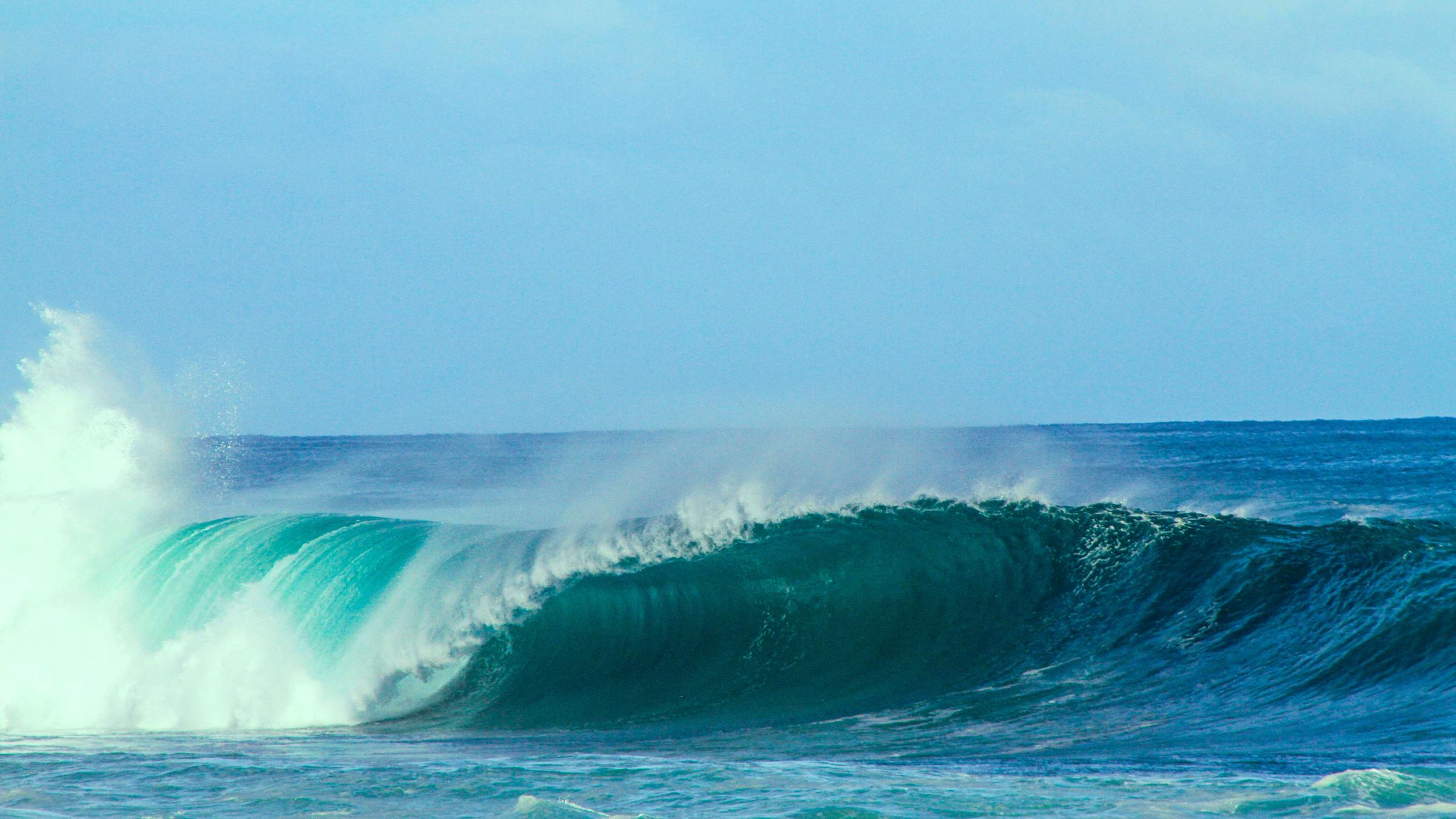
New 'GO Blue’ Center will work closely with industry partners to explore, develop and patent innovations in wind, wave and tidal power
Stevens has been approved by the National Science Foundation (NSF) as a founding partner for a new Industry-University Cooperative Research Center (IUCRC) that aims to develop marine energy resources, leveraging them to power a ‘blue’ economy by addressing technological, society, economic and environmental barriers that are holding back the growth of marine energy and blue economy.
The Growing Ocean Energy Technologies and the Blue Economy (GO Blue) Center launches November 1 as a collaborative effort among Stevens, the University of Michigan and Texas A&M-Corpus Christi.
“GO Blue is committed to accelerating marine energy technological innovations in support of traditional and emerging blue economy industries,” said Davidson Laboratory director Muhammad Hajj, lead investigator for Stevens in the effort and a noted wave-power innovator.
“By working beside esteemed academic institutions, as well as with corporate partners who will bring their industry expertise, we will be able to engage in synergetic high-impact technology development and experiential workforce training, leading to successful technology transfer and commercialization.”
Hajj noted that industry partners joining the IUCRC will gain access to the three universities’ laboratory and testing facilities — including Stevens’ historic Davidson Lab and its leading-edge wave / towing tank, already used to test scale models of many marine energy converters — as well as faculty and student talent, early and royalty-free access to intellectual property, federal funding opportunities and NSF-funded internship programs.
“We encourage anyone in the energy, maritime or blue economy space to take a look at this proposition,” he added. “Renewable energy has now developed significant forward national and global momentum, even as wave, tidal and offshore-wind power technologies remain largely untapped.”
In addition to its technical development component, the Center will also assess the societal, environmental and economic impacts of new wind, wave and tidal power facilities for coastal communities and coastal industries such as aquaculture.
Hajj also noted the IUCRC will confront related energy challenges in the maritime domain, such as decarbonizing maritime transportation. (Stevens recently partnered with the Ecuadoran government in a project to design new renewably powered ferry systems.)
Initial funding from NSF for the Center will be for up to $2.2 million in total to the three universities and extend through fall of 2029.