Two Stevens student-team biomedical projects prove the power of collaboration — and inspiration
Ureteral stents present a painful, longstanding design problem: how to develop a thin, strong device that works to accommodate urinary flow within the body while also preventing dangerous infection and calcification — and remaining easily retractable.
Physicians at one of the metropolitan New York City region's leading hospitals, Hackensack Meridian Health Hackensack University Medical Center, decided to look at the challenge with fresh eyes in 2018.
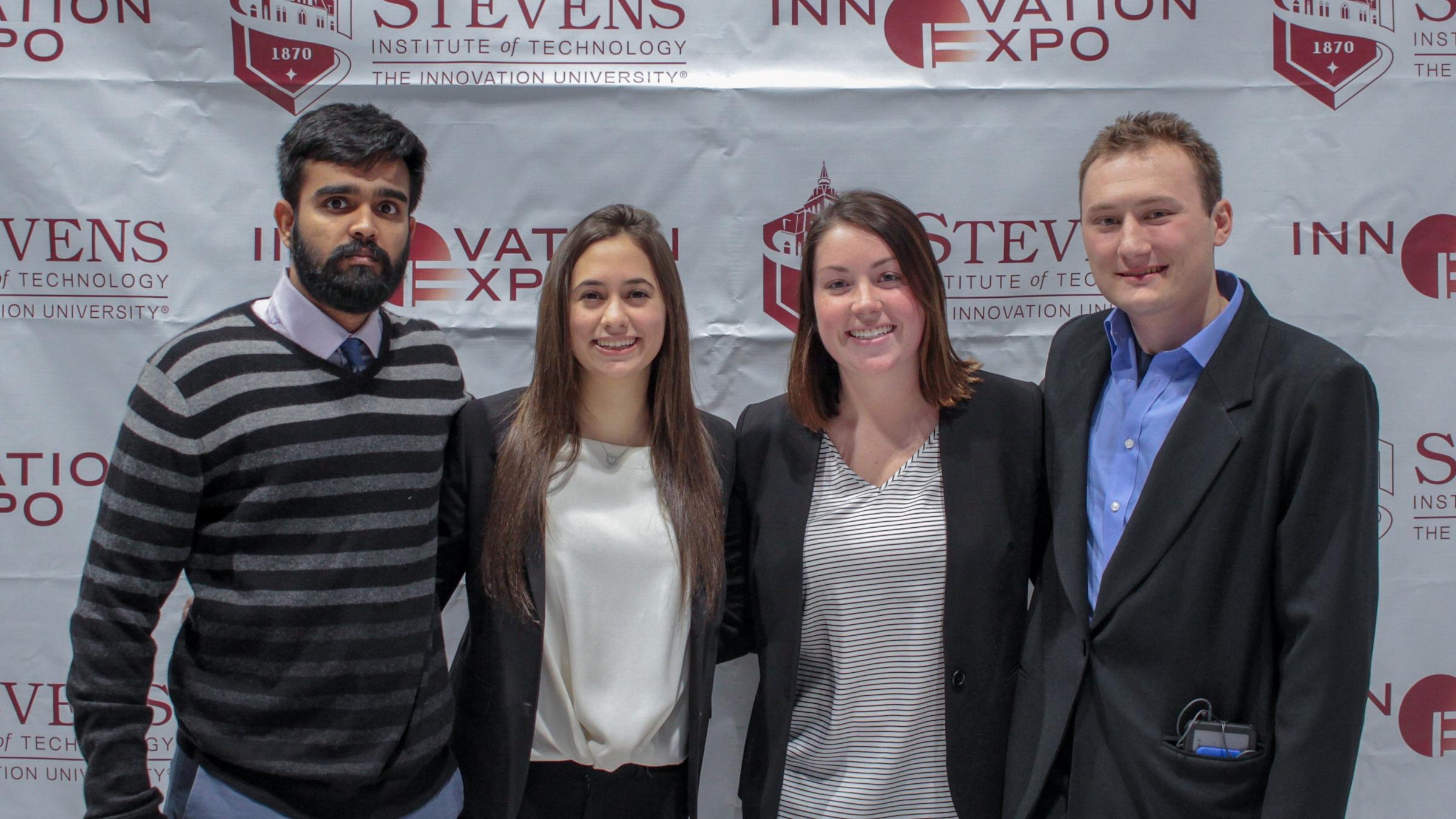
Little did they know an answer was waiting in the hands and minds of four talented Stevens Institute of Technology seniors, part of a National Academy of Inventors (NAI) student chapter working under the careful mentorship of Stevens NAI fellow Vikki Hazelwood and lecturer Becky Tucci.
Just one year later, the result is a novel medical device unique enough to have already earned a provisional patent.
"This absolutely has the potential to make patient impact," says HUMC urology chair Dr. Michael Stifelman, who worked with the student team. "There's no current stent that works like this. I brought the problem, and they developed an amazing potential solution."
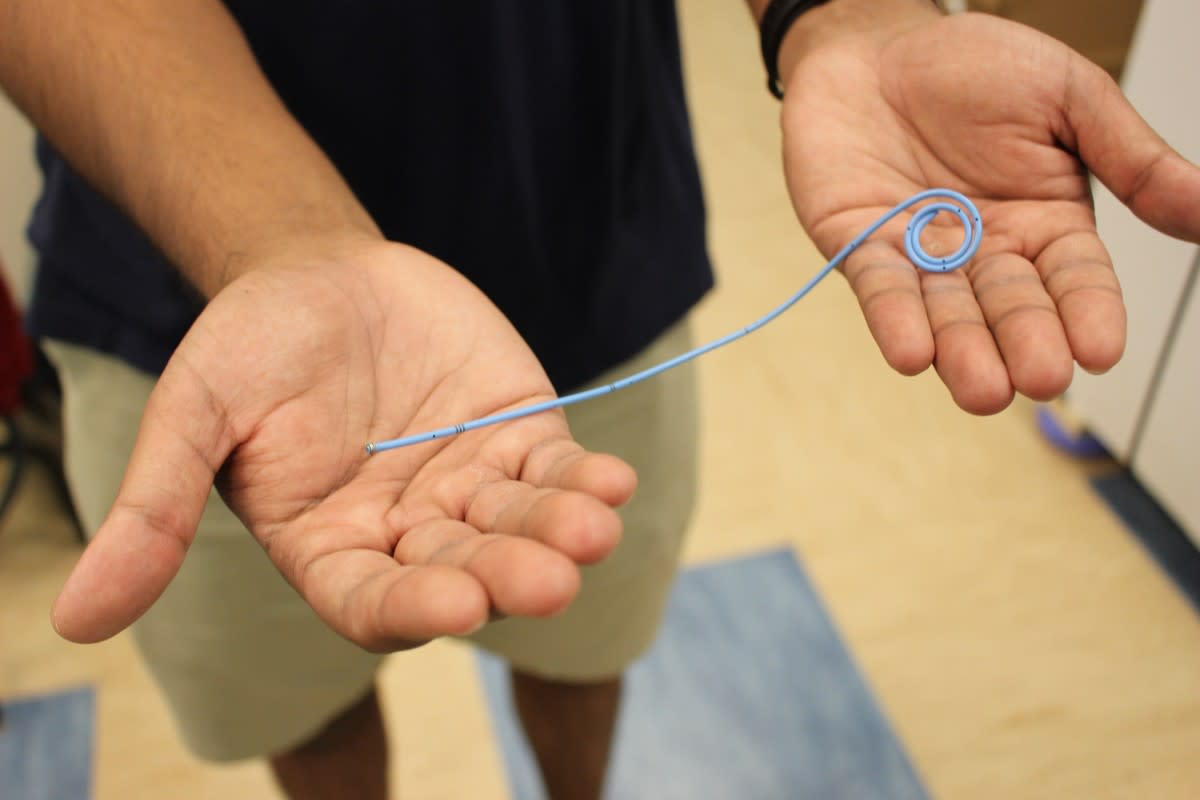
The device works by replacing the J-shaped coil at one end of a standard ureteral stent with a ring-shaped neodymium magnet; this keeps the stent from contacting the bladder while allowing easy retrieval. The smooth, circular magnet is covered with polymer material to help slow the growth of painful, dangerous calcium crystals and biofilms on the stent head. The group envisions it being harmlessly retracted with a portable, magnetically charged wand.
"It was a great exercise for us to get deeply into this challenge," recalls Mithin Nair '19, who continues to refine the new system and explore other electromagnetics applications in the university's labs this summer. "We went through a lot of calculations and theories, some of them fairly obscure, until one day we had a 'eureka' moment that a magnet might be the best answer. It's pretty exciting that our design appears to be a realistic solution."

Attached mini-cameras, onboard batteries and improved, MRI-compatible magnetic materials could all be among the potential enhancements studied. Once the system is ready, Nair envisions clinical trials of a 100-subject group as the next logical step.
"They are a fantastic team, extremely engaged," says Stifelman.
"This is an impressive student innovation, addressing a real patient need," adds Hazelwood. "I couldn't be prouder of their work on this."
Room to breathe
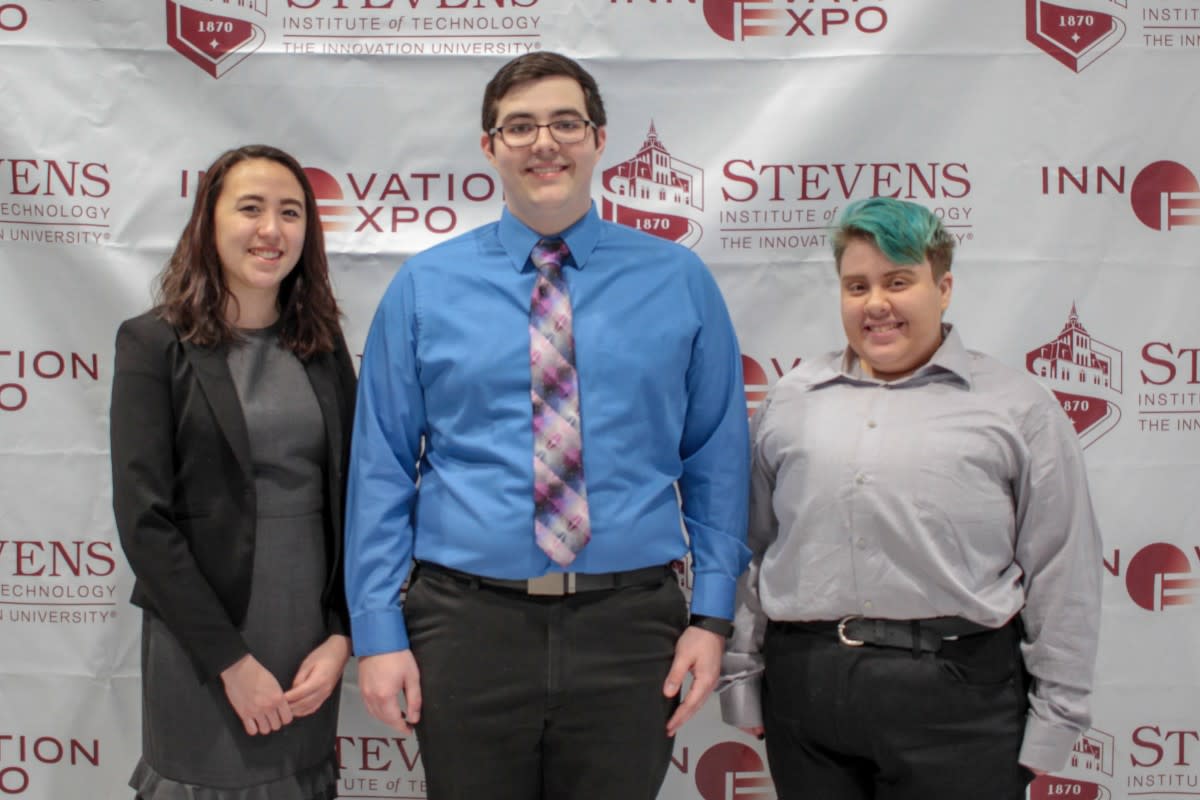
Faculty-mentored student teams approach a variety of other medical problems as a required component of their Stevens senior-year curricula, as well.
One team recently tackled the need for patients to self-administer small doses of oxygen quickly and portably in puffs, often in public spaces.
The resulting product, a handheld device, holds the potential to assist panic attack sufferers and asthmatics who may be able to tote cumbersome oxygen tanks.
"We are always pleased to connect student ingenuity and passion with the needs of industry," sums up Hazelwood. "Stevens has developed a special talent for building these bridges and helping ideate the next great innovations in these spaces, and members of our NAI student chapter are instrumental in this."